
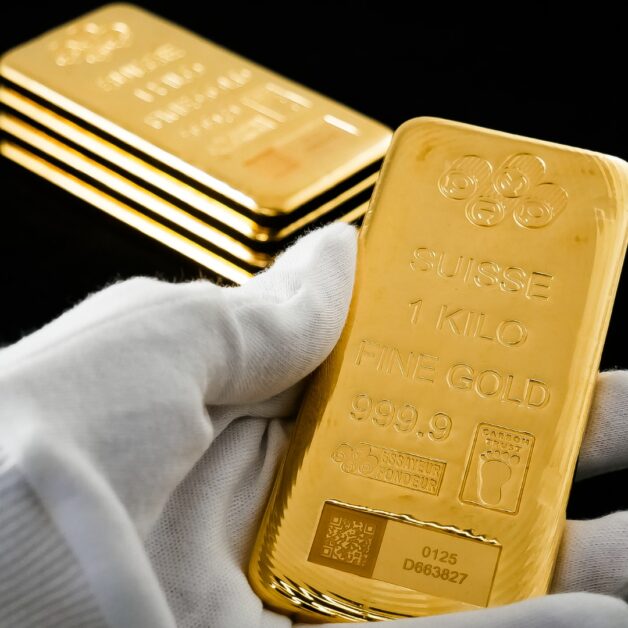
With gold prices soaring over the past two years, gold buying has reached a frenzy and has only recently begun to stabilize as prices have started to decline. Nevertheless, counterfeit gold continues to flood the market because of the high value of the precious metal. If you are considering buying physical gold bullion or coins as an investment, you need to know the best ways to authenticate gold. Here are the five methods I recommend:
1. Buy gold bullion with Veriscan or similar technologies
PAMP gold bars are in high demand and often command a higher premium because even the average person can use a smartphone application to scan the barcode and images of the bar to obtain an authentication result directly from the Veriscan app. Veriscan uses the barcode, dimensions, and minute surface details of the bar to provide real-time verification. It is completely non-destructive to both the gold bar and its packaging. Veriscan gives everyday buyers an easy way to verify gold bars, facilitating quick and convenient transactions.
However, with the advancement of counterfeiting techniques and the possibility of continued increases in gold prices, you should not rely solely on this method for authentication.
2. Cut and burn
In China, where many counterfeit gold bars and coins are manufactured, counterfeiters have developed numerous ways to deceive gold buyers, especially those purchasing gold jewelry. Some methods include filling a gold-plated bracelet with water, wrapping a thin layer of gold foil around a silver core, or inserting tungsten into gold bars.
The oldest and most reliable method is to cut the gold jewelry or bar into pieces and melt it under high heat to verify that it is genuine gold. However, this method is destructive and should only be used if you intend to sell or refine the gold.
3. Acid test
The acid test has been used for many years, but it is also a destructive method. A precious metal sample is rubbed against a black testing stone, and different acids are applied to the mark left behind. The idea is that enough material is transferred to the stone so that any base metals present can also be detected by the acid.
This method may work well for thin jewelry, but it is less suitable for gold bars or coins. Furthermore, the damage caused to the sample makes acid testing undesirable for investors who wish to preserve the appearance and value of their holdings.
4. X-ray Fluorescence (XRF) testing
XRF testing is a fast, non-destructive analytical technique used to determine the elemental composition of materials. By directing X-rays at a sample, the instrument excites the atoms, causing them to emit secondary X-rays that are unique to each element. This allows the instrument to identify the elements present in the sample.
However, one important limitation of XRF is relatively unknown to many precious metal buyers. XRF examines only a thin surface layer of the sample. If the core contains non-precious metals while the surface is genuine gold, XRF may still produce a positive result. Therefore, XRF should not be used as a standalone method for authenticating gold. Unfortunately, many gold dealers still rely on XRF as their only definitive test.
5. Sigma Metalytics Metal Verifier
This is my preferred method. Sigma Metalytics uses electromagnetic testing to rapidly and non-destructively verify metal coins and bars. It can test gold, silver, platinum, and other precious metals. Sigma instruments can test gold bars and coins even while they remain sealed in their original plastic packaging, eliminating the need to remove them. Advance Sigma units test both surface and core of the precious metal bar or coin.
However, Sigma also has limitations. It cannot reliably test jewelries because of their irregular shapes, making it suitable primarily for bullion bars and coins. In addition, Sigma instruments have size/weight limitations. Currently, the company’s most advanced consumer models can test bars weighing up to 1 kilogram.
Sigma testing, when complemented by XRF and density testing, should be able to detect the vast majority of counterfeit gold, silver, and platinum products on the market.